

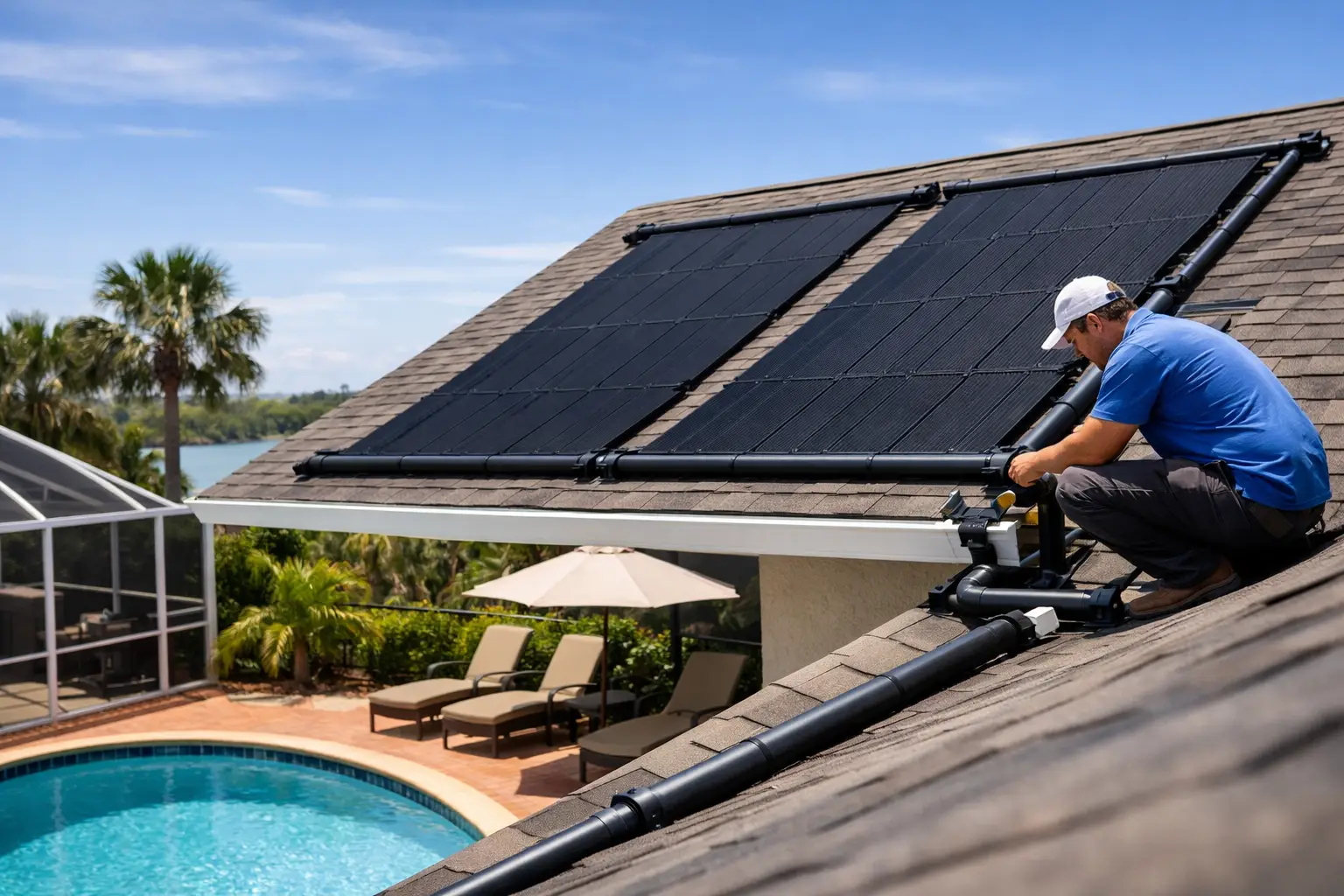
A few extra degrees can change how often your family uses the pool. In Central Florida, a solar pool heater installation can extend the comfortable swim season without relying on an expensive gas heater or running an electric heat pump around the clock. It uses the Florida sunshine already hitting your property to warm pool water before it returns to the pool.
For homeowners in Volusia County, the best results come from more than putting solar collectors on a roof. The system needs the right collector area, a practical plumbing path, a roof layout that respects shade and exposure, and professional installation that keeps your pool equipment working as it should. Here is what to expect before you move forward.
How Solar Pool Heating Works
Solar pool heating is a solar thermal system, not a solar electric panel system. Your existing pool pump sends water through a series of durable solar collectors, usually mounted on the roof. As water moves through the collectors, the sun warms it. The water then returns to the pool at a higher temperature.
A properly designed system typically includes the solar collectors, supply and return plumbing, valves, roof mounting hardware, and an automatic controller. The controller monitors water temperature and directs water to the collectors when the sun can provide useful heat. When conditions are not right, the system bypasses the collectors so the pool continues circulating normally.
That simple process is one reason solar pool heating is a practical fit for Florida. Once installed, the sun provides the heat source. Your pool pump still uses electricity, but the heating portion of the system does not require fuel deliveries or a separate high-energy heating cycle.
What Determines the Right System Size?
The size of a solar pool heater is not based on a one-size-fits-all formula. Two pools with the same number of gallons may need different collector areas because one is shaded by oak trees, another is exposed to coastal wind, or one family wants to swim from March through November.
Your installer will look at the pool’s surface area, not only its volume. Surface area has a major effect on heat loss, especially overnight. The desired swimming season, preferred water temperature, roof direction, available mounting space, and shading all matter as well.
A pool cover can make a substantial difference. It reduces evaporation, which is the largest source of heat loss for most pools. Homeowners who use a cover consistently can often hold onto more of the heat their system produces, particularly during cooler nights and windy periods. A solar heater and pool cover work best as a team.
Roof orientation matters, but it does not have to be perfect. South-facing collectors are often ideal, while east- and west-facing roof planes can still perform well depending on the layout and your heating goals. A site visit provides a far more reliable answer than choosing a system based on a pool size chart alone.
Your Existing Pool Equipment Matters Too
Solar pool heating connects to your existing circulation equipment, so the condition of that equipment is part of the conversation. A pump that is undersized, unreliable, or nearing replacement may affect the recommended approach. Variable-speed pumps can be a good match when programmed to provide sufficient water flow during sunny heating hours while helping manage overall pool operating costs.
The plumbing layout also matters. A nearby equipment pad and a direct route to the roof can simplify installation. Longer runs, multiple roof levels, or difficult access do not necessarily prevent a project, but they can affect labor, materials, and final cost.
The Solar Pool Heater Installation Process
A professional project begins with an on-site assessment. The installer measures the pool, reviews the equipment pad, evaluates roof condition and available collector space, and identifies trees or nearby structures that cast shade. This is also the time to discuss how warm you want the water and when you expect to use the pool.
Next comes the system design. The goal is a clean, functional layout that delivers the heating performance you expect without cluttering the roof or creating unnecessary plumbing runs. For homes in Daytona Beach, Port Orange, Ormond Beach, New Smyrna Beach, DeLand, and Palm Coast, local weather patterns and roof construction should be considered in the plan.
After permits or approvals are handled where required, the crew installs mounting hardware and collectors, then runs plumbing from the pool equipment to the roof and back. The system is connected with manual or automated valves that allow the water flow to be controlled correctly. Roof penetrations must be sealed carefully, and plumbing must be supported and routed for long-term durability.
The final step is commissioning. The installer checks for leaks, confirms proper water flow, tests the controller, and explains how the system operates. You should know what the valves do, how the controller decides when to heat, and what normal operation looks like before the crew leaves.
A good installation should look orderly from the ground and make sense at the equipment pad. That attention to detail matters because your solar heater is exposed to sun, rain, wind, and seasonal temperature changes year after year.
What Homeowners Should Expect From Performance
Solar pool heating is designed to raise and maintain water temperature using available sunshine. It performs best during clear, sunny weather, and Florida offers many favorable days. Still, it is not a switch that guarantees the same water temperature every day.
A stretch of cloudy weather, unusually cool overnight temperatures, heavy rain, or a cold front can reduce available heat. Wind can also pull heat from the water faster than the collectors can replace it. That is why realistic expectations and correct sizing matter more than broad promises.
For many homeowners, the value is in extending the season and making the pool more inviting during months when unheated water feels too cool. If your goal is very warm water throughout every winter cold snap, a solar system may be paired with another heating method. If your goal is low-cost, sun-powered heating for much of the year, solar can be an excellent standalone solution.
Costs, Savings, and Ownership Considerations
The cost of solar pool heater installation depends on collector size, roof complexity, plumbing distance, automation, equipment upgrades, and permit requirements. A smaller, simple system on an accessible roof will not have the same price as a large system serving a screened pool with limited roof space and a complex plumbing route.
The most useful way to evaluate the investment is to compare it with the cost of heating your pool through other methods. Solar pool heating has an upfront installation cost, but it does not consume gas to create heat. With reasonable maintenance, it can provide years of service while helping you enjoy an asset you already own more often.
Ask for a clear, written proposal that explains collector area, system components, expected installation scope, warranty coverage, and any work recommended for your existing pump or plumbing. Financing may also be available depending on the project, allowing homeowners to choose between direct purchase and payment options that fit their budget.
Care After Installation
Solar pool heating systems are relatively low maintenance, but they should not be ignored. Keep an eye on the equipment pad for drips, check that the controller responds to temperature changes, and have a professional inspect the system if you notice reduced heating performance, unusual pump behavior, or visible damage after a storm.
Florida’s weather is hard on every exterior system. Periodic inspection can catch worn valves, loose plumbing supports, damaged collectors, or roof-related concerns before they become a bigger repair. Routine pool water care remains important too, since balanced chemistry helps protect the entire circulation system.
Is a Solar Pool Heater Worth It in Volusia County?
For many local homeowners, yes, especially when the pool receives good sun exposure and the household wants a longer swim season without adding a large monthly heating bill. It is less straightforward for pools with heavy shade, major roof limitations, or expectations of resort-warm water during every winter cold front. An honest site assessment should identify those trade-offs before installation.
Sundial Solar Services can help you evaluate your roof, pool equipment, and heating goals with a design built for your property. A well-planned system does more than warm water – it gives your family more reasons to step outside and use the pool you invested in.