
New systems + existing-system service
Solar Pool Heating Installation & Repair
Solar pool heating for longer, more comfortable swimming—and service when an existing system needs help.
Based in Ormond Beach and primarily serving the greater Daytona Beach area, Sundial Solar Services installs, repairs, replaces and upgrades solar pool-heating systems for homes, businesses and qualifying commercial pool properties across Central Florida and Florida’s East Coast. Our broader service region extends from St. Augustine south to Titusville and west to Orlando.
Florida State-Certified Solar Contractor · CVC56971
We work on many systems installed by other solar companies, including systems whose original installer has gone out of business, stopped servicing the area or is otherwise unavailable. Whether you are planning a new system or trying to understand why an existing system is leaking or no longer heating properly, Sundial can evaluate the equipment and recommend a practical next step based on its actual condition.
Why Solar Pool Heating Works Well in Florida
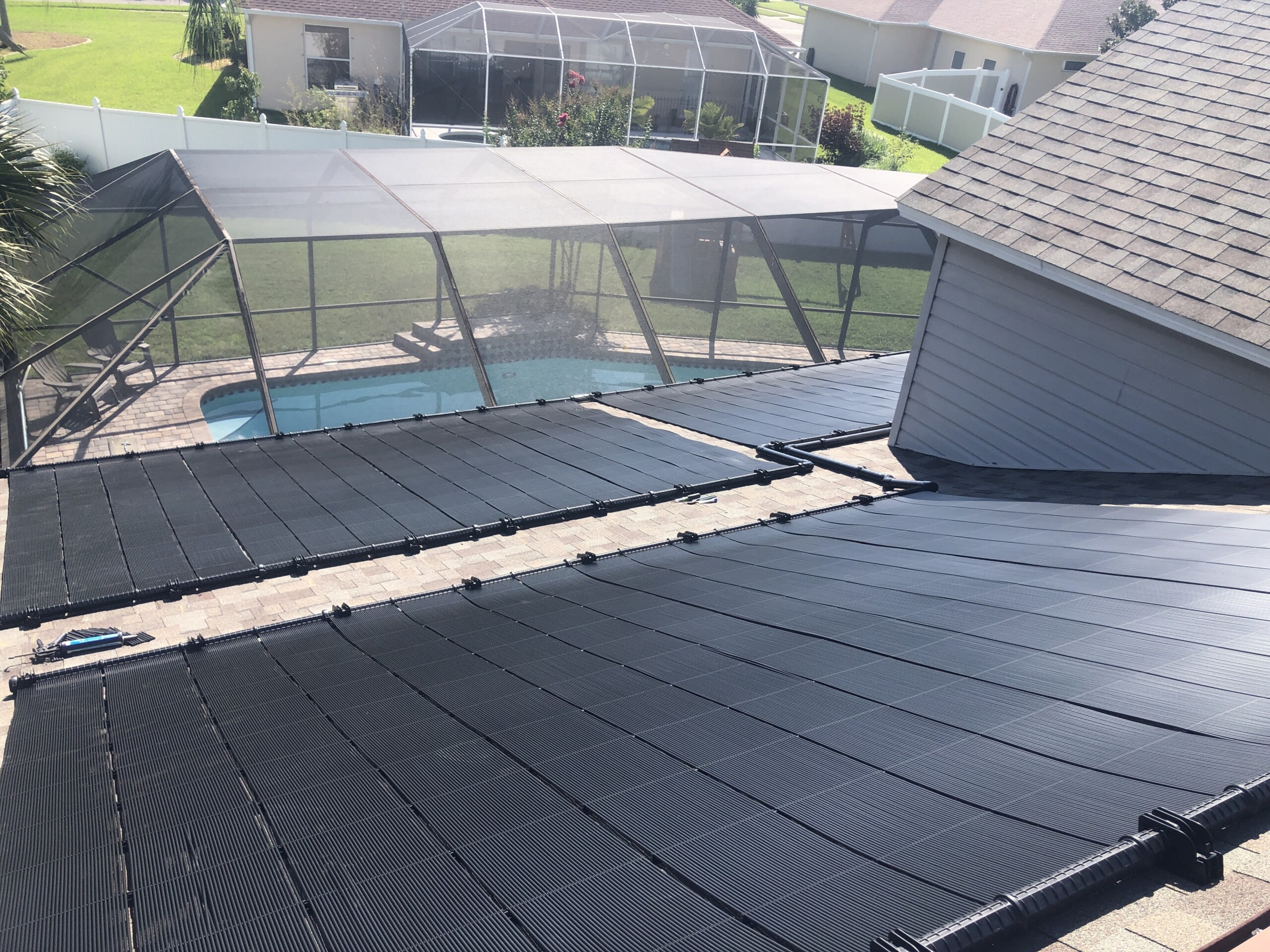
Solar pool heating uses the solar energy already available at your property to help extend the comfortable swimming season. Instead of creating heat with gas or a high-energy electric heating cycle, the system circulates pool water through solar collectors, where sunlight warms the water before it returns to the pool.
Florida provides many favorable days for solar pool heating, but every property and pool is different. Performance depends on collector area, pool size, usable roof orientation, available sunlight, shading, weather, desired water temperature, pool-cover use and the overall system design. Wind, heavy rain, cold fronts and cool nights can increase heat loss or reduce the solar energy available on a particular day.
A properly planned system should be designed around the homeowner’s goals and the conditions at the property. Solar pool heating can make a pool more comfortable for more of the year, but it should not be presented as a guarantee of a specific temperature or uninterrupted year-round swimming.
How a Solar Pool Heater Works
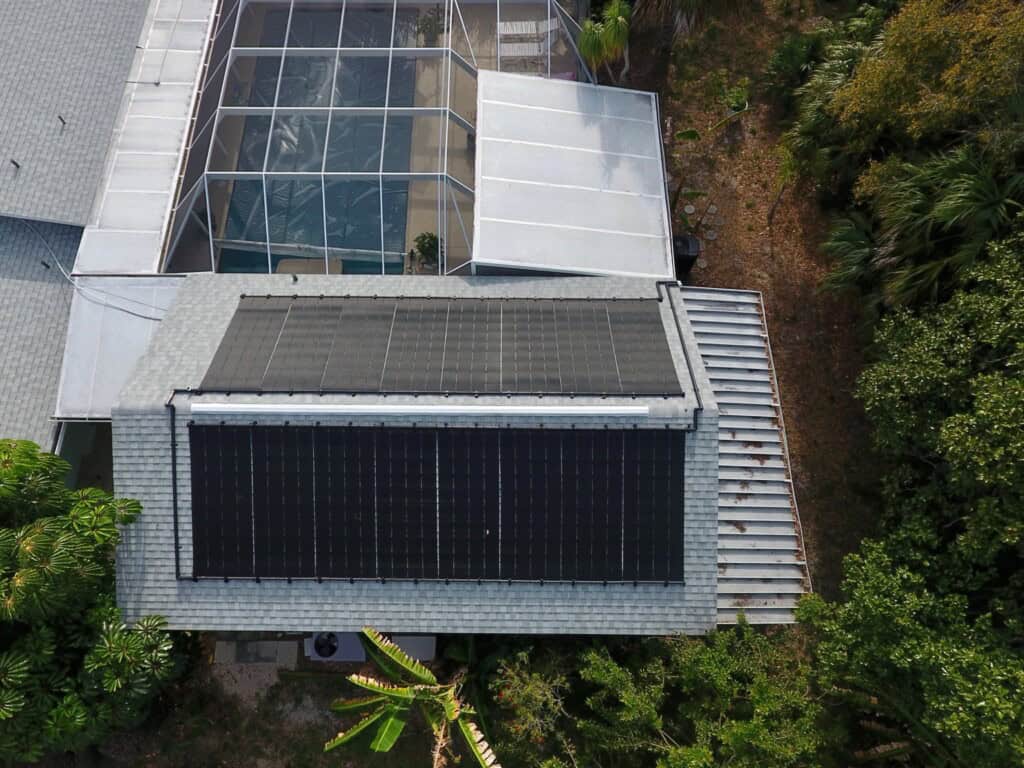
A solar pool-heating system uses the pool’s circulation system to send water through solar collectors. The collectors absorb solar energy and transfer that warmth to the water. The heated water then returns to the pool.
Depending on the system, its components may include:
- Existing pool pump: Provides the water flow needed to circulate water through the filtration and solar-heating system.
- Solar collectors: Roof- or ground-mounted components that absorb solar energy and warm the water moving through them.
- Plumbing: Carries water from the pool equipment to the collectors and back to the pool.
- Manual or automatic valves: Direct water through the collectors when heating is wanted and allow the collectors to be bypassed when appropriate.
- Valve actuator: Moves an automatic valve in response to instructions from the controller.
- Controller: Compares operating conditions and manages when water should circulate through the solar collectors.
- Temperature sensors: Help the controller evaluate pool-water and collector conditions.
- Vacuum-relief valve: Allows air into the system when appropriate so rooftop collectors and plumbing can drain and operate as designed.
The exact arrangement varies by system. Correct water flow, properly operating valves and controls, supported plumbing and a collector layout suited to the property all contribute to reliable operation.
Solar Pool Heating Installation
Every installation should begin with an evaluation of the pool, the existing circulation equipment and the property. Sundial’s conceptual installation process includes:
- Evaluating the homeowner’s pool-heating goals and the existing pool system.
- Reviewing usable roof or collector area, sunlight, shading and other site conditions.
- Determining an appropriate collector layout for the available space and system requirements.
- Planning the plumbing route, valves, controls and related equipment.
- Installing the collectors and associated plumbing, mounting and control components.
- Configuring and testing system flow and operation.
- Explaining the controls and normal operation to the homeowner.
The appropriate design depends on the individual property. Sundial does not rely on a universal promise about system size, project duration or resulting pool temperature.
Request a New Solar Pool-Heating System Estimate
Residential & Commercial Solar Pool Heating
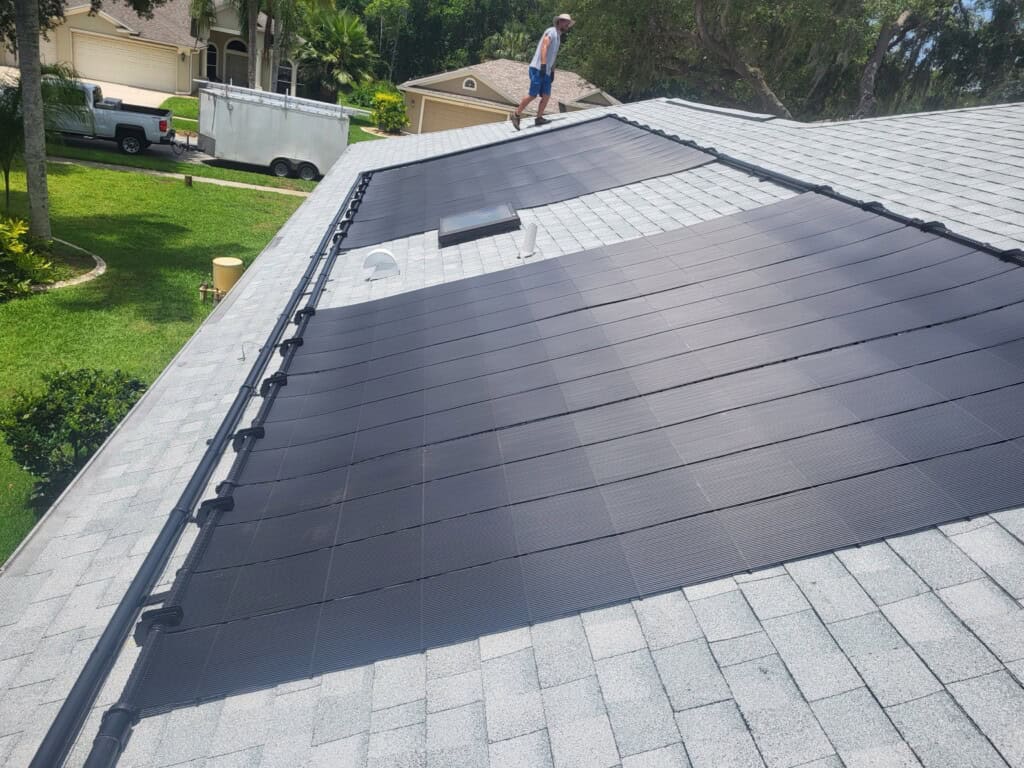
Sundial evaluates solar pool-heating projects for residential pools and qualifying commercial properties. Residential and commercial pools can have very different pool sizes, operating schedules, circulation equipment and temperature goals, so collector area and system configuration must be evaluated for the individual property.
Solar pool heating can help extend the comfortable swimming season without using gas or a separate high-energy heating cycle as the primary heat source. Actual performance varies with available sunlight, collector area, pool size, roof orientation, shading, wind, weather, pool-cover use and system operation. Sundial does not promise a universal temperature increase or year-round swimming.
Common Solar Pool Heating Problems We Repair
Solar pool-heating equipment is exposed to intense sunlight, changing roof temperatures, heavy rain, wind, vegetation, wildlife and seasonal weather. A service problem can originate in the collectors, rooftop plumbing, pool-equipment area, controls or the way an older system was installed.
Collector Leaks and Failures
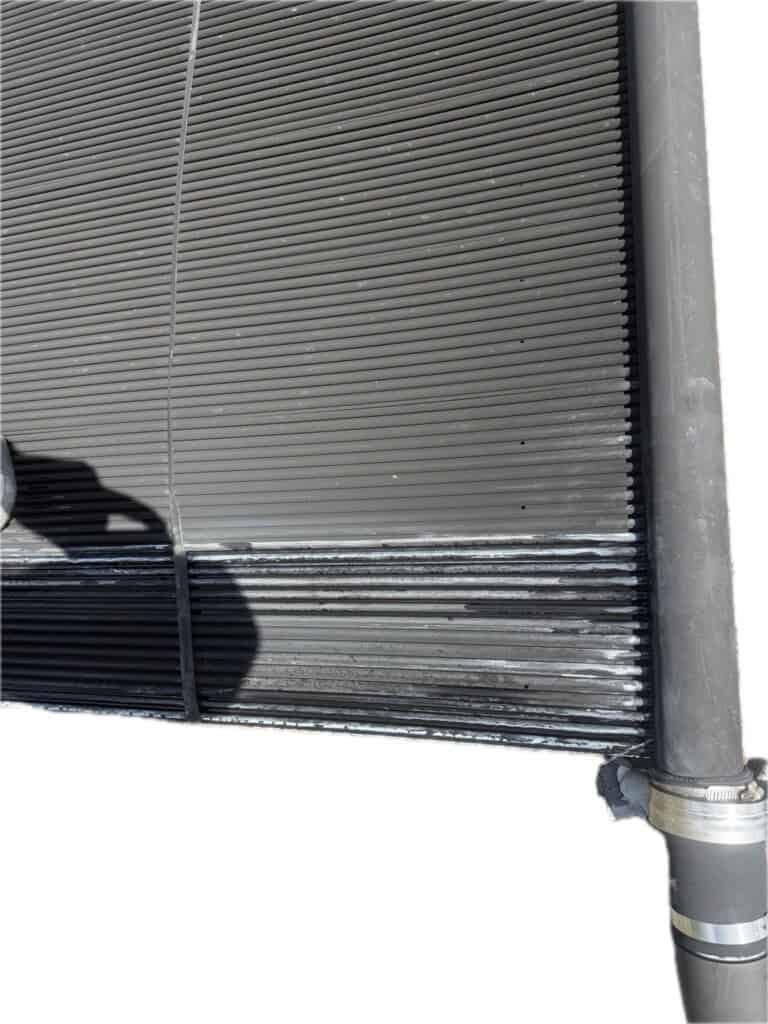
Collectors may develop leaks because of age, long-term UV exposure, physical damage, material deterioration, storm or debris impacts, weaknesses in the design or construction of certain collector types, or other conditions affecting the system. A leaking collector does not automatically mean that every collector must be replaced. Sundial evaluates the affected equipment and the condition of the rest of the system before recommending repair, partial replacement or complete replacement.
Rodent Damage
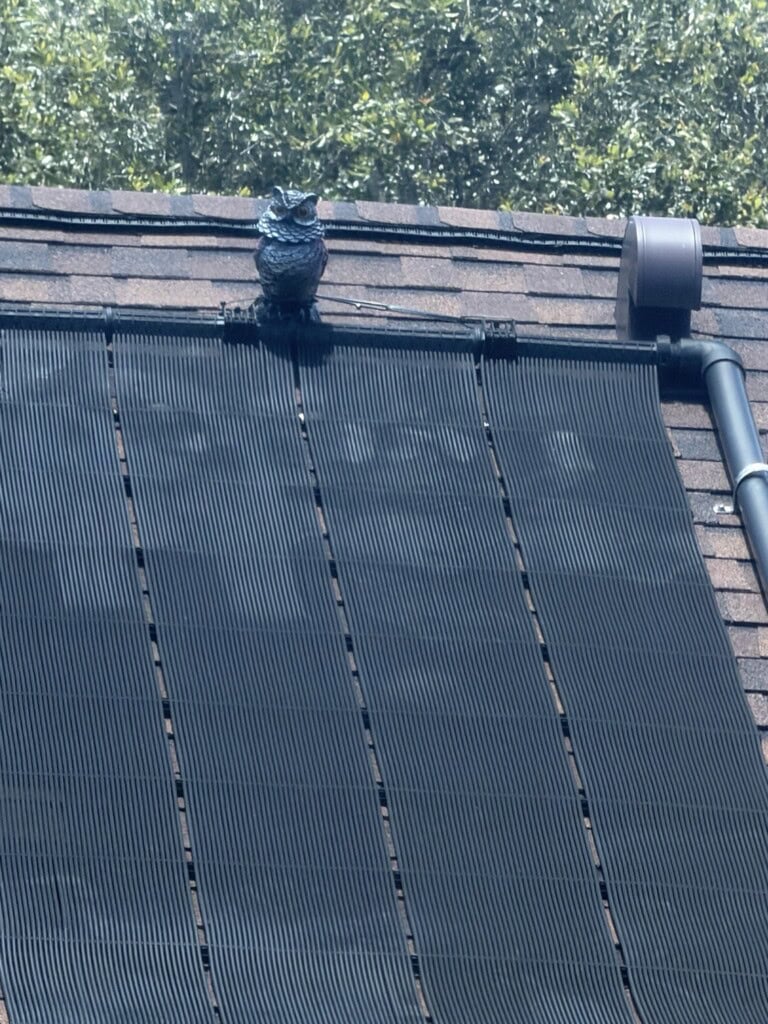
In some neighborhoods and properties, squirrels or other rodents may chew through portions of solar pool collectors or related materials. Where appropriate, Sundial can evaluate whether the affected equipment can be repaired or should be replaced.
Deterrent measures may sometimes be considered, including visual deterrents or changes around the affected area. No deterrent can be represented as guaranteed prevention, and the appropriate response depends on the property and the type of damage.
Expansion and Contraction
Florida rooftop plumbing and solar components go through substantial heating and cooling. As temperatures change, piping and components expand and contract. That movement can place stress on fittings, joints and supports, particularly where pipe support, layout or an existing glue joint is inadequate.
Cracked PVC and Fittings
Movement, age, UV exposure, mechanical stress and previous installation conditions can contribute to cracked PVC, failed fittings and plumbing leaks. Repairing the visible crack without considering pipe movement or support may leave the underlying cause unresolved.
Header, Manifold and Collector-Connection Leaks
Leaks can occur where collectors connect to one another or where plumbing connects to the collector array. Sundial checks the location of the leak, the condition of the connection and whether movement, aging materials or installation conditions contributed to the failure.
Vacuum-Relief Valve Problems
A vacuum-relief valve is a small but important part of many systems. A leaking, obstructed, incorrectly positioned or malfunctioning valve can contribute to drainage or operating problems. Sundial can evaluate the valve along with the rest of the system rather than treating it as an isolated component.
Controller and Temperature-Sensor Problems
A solar pool heater may fail to turn on when useful heat is available—or may operate when conditions are not favorable—because of controller settings, damaged wiring, sensor failure, sensor placement or another control issue. Troubleshooting should verify what the controller is reading and how the system responds.
Automatic Valve and Actuator Problems
Automatic valves and actuators direct water through or around the solar collectors. A stuck valve, failed actuator, wiring issue or incorrect configuration can prevent proper heating or circulation even when the collectors themselves are in good condition.
Poor Circulation or Flow
Inadequate water flow can reduce heating performance and may point to pump settings, filtration issues, valve position, plumbing restrictions, air entering the system or another circulation problem. The entire pool and solar circulation path may need to be considered.
Storm, Wind and Debris Damage
Tropical weather, wind-driven debris and falling vegetation can damage collectors, plumbing, supports and roof-mounted components. After a storm, visible damage is not always the only issue; flow, mounting, controls and plumbing connections may also require inspection.
Problems From a Previous Installation
Collector mounting, pipe support and layout, plumbing connections, controls, sensors, valves and other installation details can create avoidable service problems when they were not configured or installed correctly. Sundial evaluates the existing work without assuming that a single visible symptom tells the whole story.
Diagnose the Cause — Not Just the Leak
The place where water appears is not always the place where the problem began. A visible leak or loss of heating may result from the collector, plumbing movement, a fitting, a valve or actuator, a sensor or controller, poor circulation, storm damage, aging equipment or previous installation conditions.
Sundial evaluates how the system is operating and looks for the cause behind the symptom. That approach helps avoid making a small repair that fails to address the condition creating repeated problems.
Repair or Replace?
Not every leaking collector requires complete system replacement. A localized problem in otherwise supportable equipment may be a reasonable repair candidate. Conversely, repeatedly repairing a brittle, heavily damaged or difficult-to-support system may not be the best long-term investment.
Factors Sundial may consider include:
- The age and overall condition of the system.
- The extent and frequency of leaks or other failures.
- The availability of compatible parts and equipment.
- The condition of the collectors, plumbing, valves and controls.
- The quality and supportability of the existing installation.
- Whether a repair would address the underlying cause.
- The likely cost of continued service compared with partial or complete replacement.
The recommendation should be based on the individual system, not a universal lifespan number or automatic replacement rule.
Brands We Service
Sundial services many types of solar pool-heating systems and equipment, including:
Heliocol • SunStar • Eco Spark • Nuvis • HiTec • EcoSun • SI • FAFCO • and others
Serviceability depends on the particular model, equipment condition, compatible-part availability and whether a product has been discontinued. Listing a brand does not mean that every model or every damaged component can be repaired.
Original Installer No Longer Available?
Many homeowners inherit an existing solar pool-heating system or discover that the company that installed it has gone out of business, stopped servicing the area or is otherwise unavailable. Sundial specializes in evaluating and taking over service for many of these existing systems.
We can inspect the current equipment, identify service issues and explain whether repair, component replacement or a broader system update is the practical next step. Learn more about Sundial’s Solar Repair & Maintenance services.
Warranty-Related Service
Sundial can diagnose failures, assist with qualifying manufacturer warranty claims or replacement requests, perform warranty-related replacement or service where applicable, and install replacement equipment. Eligibility and approval depend on the manufacturer, product, system age, warranty terms, documentation and the conditions affecting the individual system.
An inspection or service request does not guarantee that the manufacturer will provide warranty coverage. Sundial can help determine what information may be needed and whether the equipment appears to qualify under the applicable terms. Additional labor, equipment or other charges may apply depending on the warranty and the work required.
Roof Replacement & Solar Pool Heating
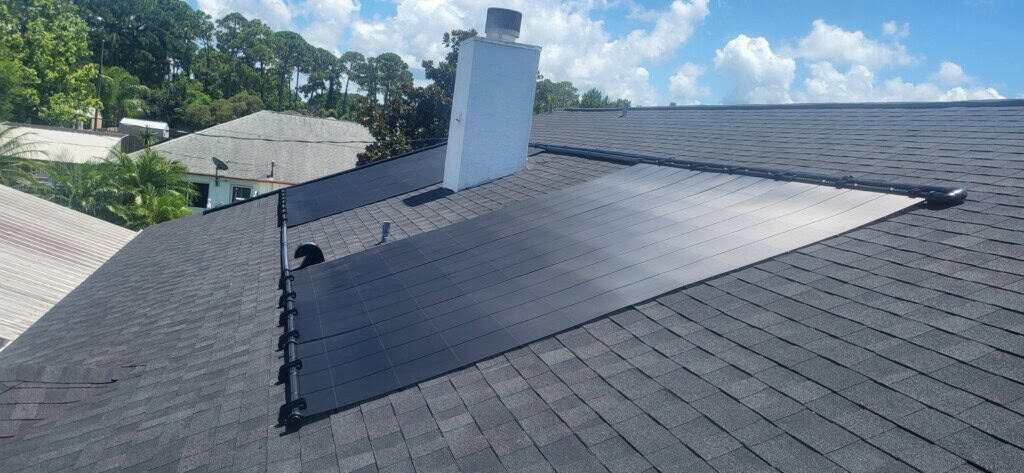
Rooftop solar pool collectors generally need to be properly removed before a roof replacement and reinstalled after the new roof is ready. Leaving rooftop solar equipment in place can prevent the roofing contractor from accessing the roof area and may create avoidable damage or coordination problems.
Removal and reinstallation also provides an opportunity to evaluate the condition of existing collectors, plumbing, mounting components, valves and related equipment. If a system already has brittle, leaking or unsupported components, the homeowner can consider those conditions before reinstalling everything on the new roof.
Learn more about Solar Removal & Reinstallation for Roof Replacement.
Cash and Financing Options
Sundial offers cash-purchase and financing options for qualifying new solar pool-heating projects. Availability, eligibility and terms vary by project; customers should review the specific proposal and financing documents.
For related needs, explore solar repair and maintenance, solar removal and reinstallation for roof replacement, solar electric systems, solar water heating, or support when an original solar company is no longer available.
Solar Pool Heating Experience for Florida Conditions
Solar pool-heating systems in Florida operate in demanding exterior conditions. Heat and UV exposure affect materials over time. Rooftop equipment experiences high surface temperatures and repeated expansion and contraction. Heavy rain, tropical storms, wind-driven debris and vegetation can affect collectors and plumbing. Properties closer to the coast may also experience salt exposure, while squirrels and other rodents create problems at some homes.
Sundial brings local field experience to systems across a broader Central Florida and East Coast region extending from St. Augustine south to Titusville and west to Orlando. The objective is not to force every property into the same solution, but to evaluate the roof, pool equipment, collector system and homeowner’s goals together.
Solar Pool Heating FAQs
How does solar pool heating work?
The pool pump circulates water through solar collectors. Solar energy warms the water inside the collectors, and the water returns to the pool. Valves, controls and temperature sensors may automate when water flows through the collector array.
How warm will solar pool heating make my pool?
There is no single guaranteed temperature increase. Results depend on collector area, pool size, sunlight, roof orientation, shade, weather, desired temperature, wind, nighttime heat loss, pool-cover use and system design. Solar pool heating is best viewed as a way to extend the comfortable swimming season using available solar energy.
Can you repair a leaking solar pool panel?
Many collector leaks can be evaluated for repair, but the appropriate solution depends on the collector type, location and extent of the damage, material condition and compatible-part availability. Some conditions make collector or system replacement more practical.
Why is my solar pool heater leaking?
Possible causes include collector damage, aging or deteriorated materials, UV exposure, rodent damage, cracked plumbing, failed fittings, expansion and contraction, connection leaks, storm damage or previous installation conditions. The visible leak may not reveal the full cause.
Why isn’t my solar pool heater heating properly?
Reduced heating can result from weather or shade, poor circulation, valve position, actuator problems, controller or sensor issues, air entering the system, plumbing restrictions, collector damage or a mismatch between the system and the pool’s current needs.
Do you repair systems installed by another company?
Yes, Sundial services many systems installed by other companies. Serviceability depends on the condition and design of the system and the availability of compatible equipment or parts.
What if my original solar company went out of business?
Sundial often evaluates existing systems when the original installer has closed, stopped serving the area or is otherwise unavailable. We can assess the equipment and recommend repair, component replacement or system replacement when appropriate.
Can rodents damage solar pool collectors?
Yes. At some properties, squirrels or other rodents chew collector tubes or related materials. Sundial can evaluate the damage and whether repair or replacement is appropriate. Deterrents may be considered, but no method can be guaranteed to prevent future damage.
Should I repair or replace an older solar pool-heating system?
The decision depends on overall condition, repeated failures, collector and plumbing condition, installation quality, part availability and the cost of continued repairs compared with replacement. Age alone should not be the only factor.
Do solar pool collectors need to be removed for a new roof?
Rooftop collectors generally need to be properly removed so the roofer can access and replace the roof. Afterward, suitable equipment can be reinstalled and tested. The R&R process is also an opportunity to evaluate aging or damaged solar components.
Can Sundial perform warranty work?
Sundial can assist with qualifying manufacturer warranty claims or replacements and perform warranty-related service where applicable. Coverage and approval depend on the manufacturer, product, system age, warranty terms and individual circumstances. Coverage cannot be guaranteed, and additional labor, equipment or other charges may apply.
What brands do you service?
Sundial services many systems, including Heliocol, SunStar, Eco Spark, Nuvis, HiTec, EcoSun, SI, FAFCO and others. The ability to repair a specific product depends on its condition, model and compatible-part availability.
Need Solar Pool Heating Service or a New System?
Whether you have a leak, control problem, damaged collector, existing system that is no longer heating properly, or plans for a new or replacement system, Sundial can evaluate the property and help identify the appropriate next step.
Request Solar Pool Heating Service