
A $250 summer electric bill can make a homeowner look at the Florida sun differently. With solar panel installation Daytona Beach property owners can produce a meaningful share of their own electricity, reduce dependence on utility rate changes, and make a long-term improvement to their home. The right system is not simply a set number of panels on a roof. It is a local design decision based on your energy use, roof, goals, and budget.
For homes with strong sun exposure and electric bills around $200 or more per month, solar can be a practical investment. It can also be paired with battery storage, pool heating, solar water heating, or other upgrades that make better use of the energy your property receives every day.
What Makes a Daytona Beach Solar Project Different?
Daytona Beach offers plenty of sunshine, but local solar planning still requires care. Salt air, humid summers, afternoon storms, hurricane-season wind requirements, roof age, and shade from palms or neighboring trees all affect a system’s design. A panel layout that looks good on paper may underperform if the roof has frequent shade or if the home uses most of its energy after sunset.
A professional assessment should begin with your actual electricity consumption. Reviewing a full year of electric bills helps show seasonal spikes from air conditioning, pool equipment, electric water heating, and household changes. A family that uses much more electricity in July than January needs a design that accounts for that pattern, not a one-size-fits-all estimate.
Your roof matters just as much. South-facing exposure is helpful, but east- and west-facing roof sections can also be excellent options, especially when they match how your household uses power. Roof condition, available space, pitch, and structural details should be reviewed before installation. If a roof is nearing replacement age, handling that project first may prevent the added cost of removing and reinstalling panels later.
Solar Savings Depend on When You Use Power
Solar panels make electricity while the sun is out. That means the best savings result when your home uses a reasonable amount of power during daylight hours or when available utility billing arrangements credit excess production appropriately. Air conditioning, pool pumps, appliances, and daytime work-from-home use can all influence the value you receive from a system.
This is why an honest proposal should show expected production and explain the assumptions behind savings. Solar often lowers electric bills by more than 20%, but the exact result depends on system size, energy habits, weather, electric rates, and applicable utility policies. A responsible contractor will not promise that a panel system eliminates every bill for every home.
The Solar Panel Installation Process in Daytona Beach
A well-managed project should feel organized from the first conversation through final operation. The process starts with a site visit and energy review, then moves into system design, permitting, installation, inspection, and utility approval.
Start With a Customized Design
The design phase is where local experience pays off. Your installer should examine shade, roof space, roof orientation, electrical equipment, and your energy goals. Some homeowners want to offset a portion of their bill while keeping the upfront investment lower. Others want to produce as much of their annual electricity as practical. Neither choice is automatically better. It depends on your household and the type of return you want from the project.
The equipment selection should also fit the property. Panel appearance, inverter design, monitoring options, and future battery compatibility are worth discussing before work begins. Clean roof aesthetics matter to many homeowners, and a thoughtful layout can protect the look of the home while still delivering strong production.
Permits, Engineering, and Utility Coordination
Solar work in Volusia County involves more than mounting equipment. Plans may require engineering review, permitting, inspections, and coordination with the utility before the system can be turned on. Local requirements are there to help ensure the array, racking, wiring, and electrical connections meet current safety standards.
A state-certified solar contractor handles these technical steps as part of the project. That matters because mistakes in paperwork or system design can delay approval. Working with a local team also gives you a clearer point of contact if questions come up during permitting, installation, or inspection.
Installation Day and Final Activation
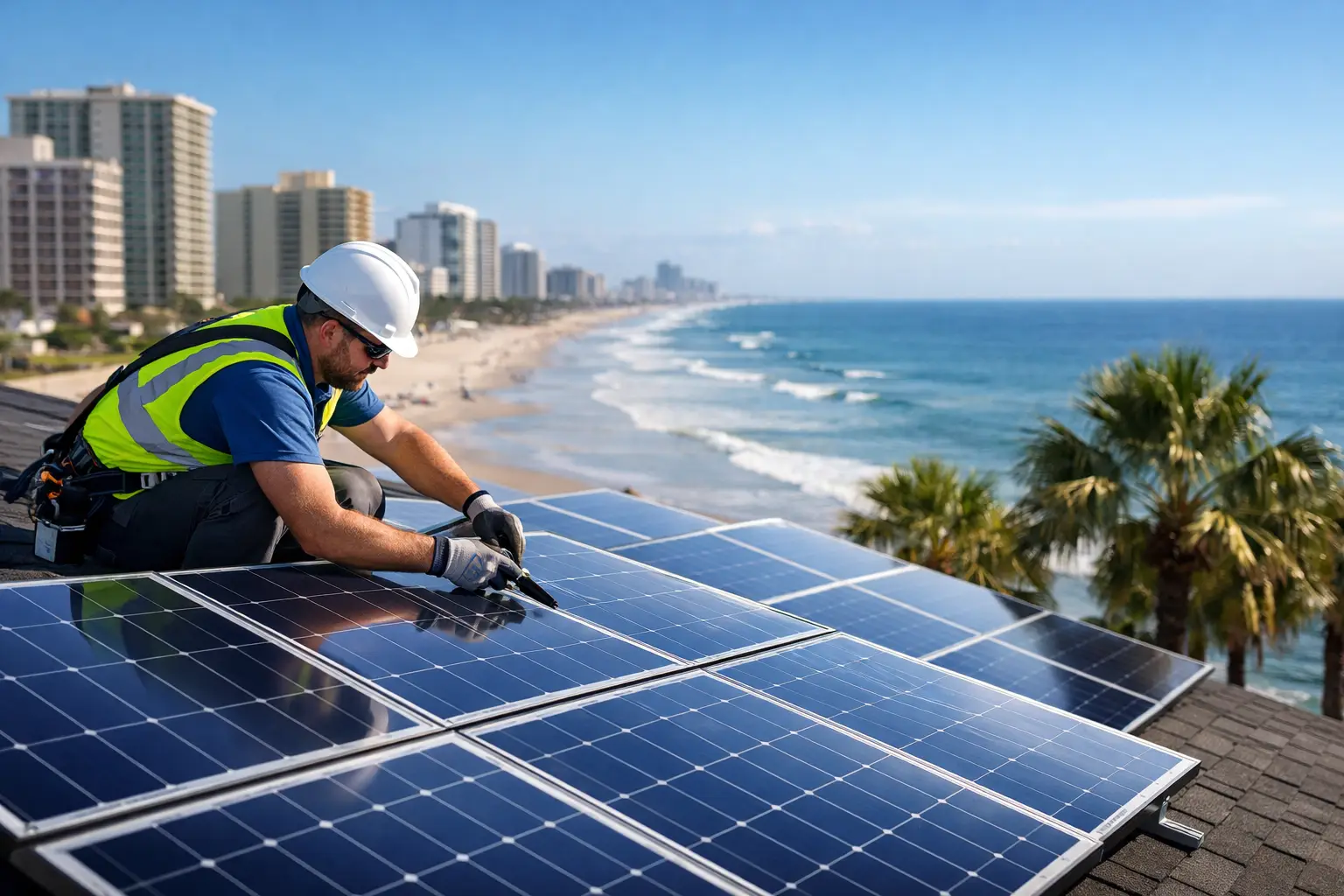
Most residential solar installations can be completed efficiently once materials and approvals are in place. Installers secure the roof mounting system, set the panels, connect electrical components, and install monitoring equipment. They should keep the work area orderly and explain what to expect while the system awaits final inspection and permission to operate.
After activation, monitoring helps you see how much electricity your system is producing. It is a useful tool, not just a screen to check once. Production data can help identify a problem early and lets homeowners understand how weather, seasons, and energy use affect their results.
Should You Add a Solar Battery?
Solar panels and battery backup solve related but different problems. Panels reduce the amount of electricity you need to buy from the utility. A battery stores energy for use later, which can provide backup power during an outage and help you use more of the energy your system produces.
A standard grid-connected solar system generally shuts down during an outage for line-worker safety. Panels alone do not keep your refrigerator, internet, or air conditioner running when the grid goes down. Battery backup can do that, but the right battery size depends on which circuits you want to support and how long you need backup power.
For some homeowners, a battery is worth the added cost because storm preparedness and energy independence are priorities. For others, starting with solar panels and leaving room for a future battery is the better fit. The same thinking applies to solar AC and more advanced off-grid systems: they can be valuable solutions, but they need a careful load calculation and realistic expectations.
Ownership, Loans, and Leasing Options
How you pay for solar affects both the monthly cost and the long-term return. A direct purchase usually offers the strongest long-term ownership position because you own the equipment from the beginning. It requires more upfront capital, but it can maximize the value of energy savings over the life of the system.
A solar loan spreads the cost into predictable payments. This can be a sensible choice when a homeowner wants to keep cash available for other needs while moving forward with an energy upgrade. Compare the interest rate, term, dealer fees, payment structure, and whether extra payments are allowed before making a decision.
Leasing can reduce upfront cost, but it also changes who owns the equipment and how savings are shared. It may work for certain households, yet it deserves a careful review, particularly if you expect to sell the home during the agreement. There is no single best option. The right path is the one that fits your financial goals, moving plans, and comfort with ownership.
Think Beyond Panels When Planning Your Property
Daytona Beach homeowners with pools often have another major energy opportunity: solar pool heating. Using solar thermal collectors to extend swim season can be an efficient complement to a solar electric system. Solar water heating and solar-powered outdoor lighting may also make sense depending on the property.
These options should be evaluated separately from photovoltaic panels because they solve different energy needs. A pool-heating project is about warming water, while photovoltaic panels make electricity. Combining them can create a more complete solar plan, but only if each component provides value for your home.
Choose a Contractor Who Will Be There After Installation
The lowest quote is not always the lowest-cost decision. Ask who designs the system, obtains permits, performs the installation, handles inspections, and provides service if your monitoring shows an issue. You should also ask about roof penetrations, workmanship coverage, equipment warranties, maintenance needs, and what support looks like years after the system is turned on.
Solar equipment is generally low maintenance, but low maintenance does not mean no support. Storm debris, equipment alerts, roof work, and changing energy needs can all create service questions. A local, family-owned contractor such as Sundial Solar Services can offer the advantage of ongoing help from a team that works in the same communities it serves.
If your electric bill keeps climbing, begin with a straightforward property and energy review. A clear proposal should help you see what your roof can produce, what the project costs, and where solar fits into the future you want for your home. That is a better place to make a decision than another summer bill arriving in the mailbox.