

New installation + failed-fan replacement
Solar Attic Fan Installation & Replacement
Roof-mounted solar attic ventilation planned for the home, roof and appropriate safety controls.
Solar attic fans provide roof-mounted ventilation using sunlight as their primary power source. Sundial Solar Services installs new solar attic fans, replaces failed or aging units, and evaluates existing attic-fan installations for homeowners throughout all of Volusia and Flagler Counties. Appropriate surrounding-area projects may also be evaluated.
Based in Ormond Beach, Sundial approaches attic ventilation as part of the home’s overall roof and ventilation system. Fan selection, roof design, available intake ventilation, controls, flashing, and installation quality all affect how the finished system performs. We explain the practical options without promising a universal temperature change or a guaranteed reduction in energy bills.
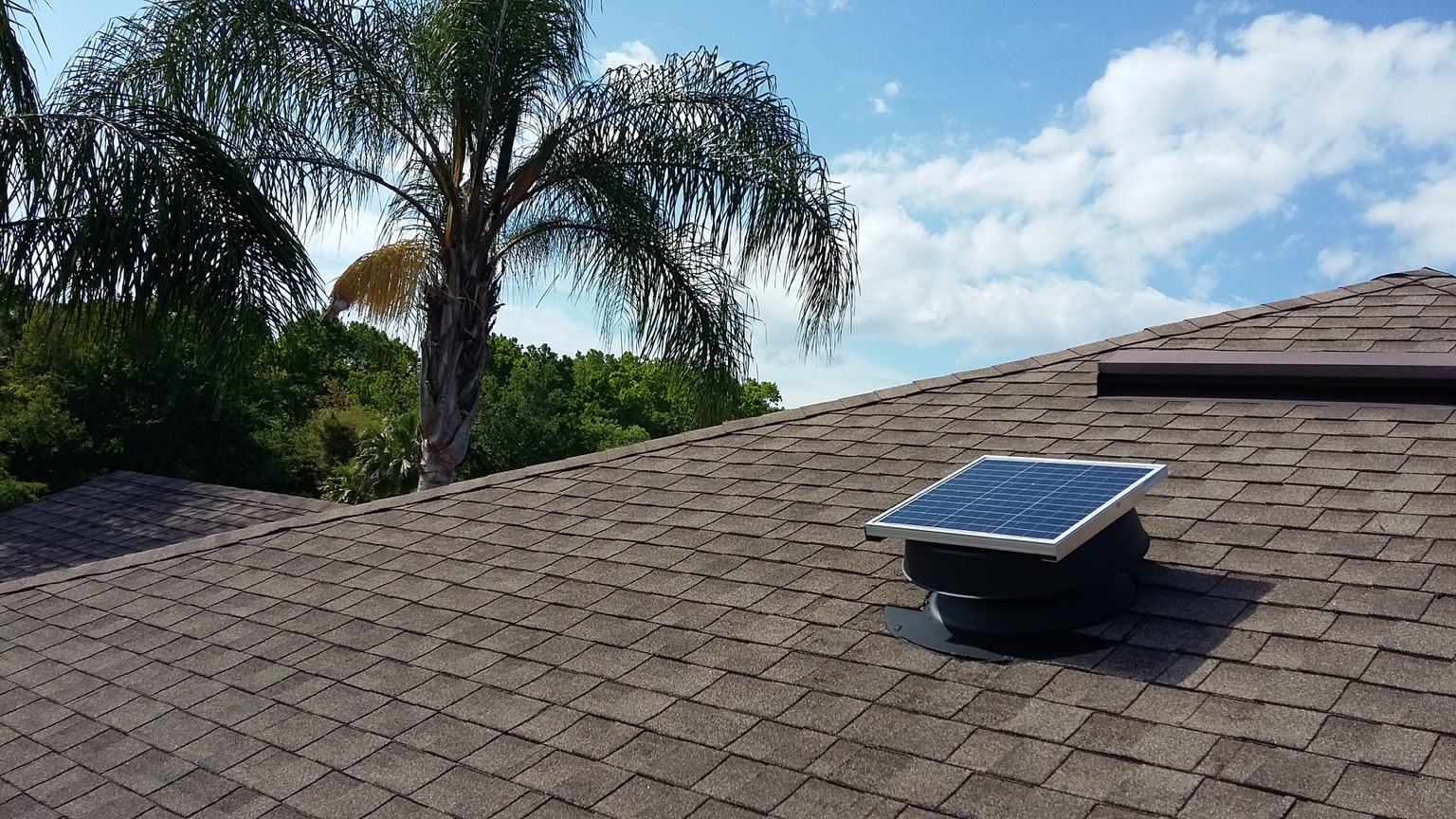
How Solar Attic Ventilation Works
A photovoltaic panel converts available sunlight into electricity for the fan. When operating conditions meet the installed product’s design, the roof-mounted fan exhausts attic air through its ventilation opening. Appropriate existing intake ventilation—often located at soffits or other intake points—must allow replacement air to enter the attic as warmer air is exhausted.
A solar attic fan does not operate independently of the rest of the attic. Overall ventilation performance depends on the home’s intake and exhaust configuration, attic size, roof design, fan sizing, placement, installation, and the amount of available sunlight. Adding more fans is not automatically better; excessive or poorly planned exhaust can be ineffective or interfere with the intended ventilation pattern.
Solar Attic Fan Installation & Replacement
New Roof-Mounted Solar Attic Fan Installation
Sundial primarily installs solar-powered attic fans for residential roof applications. A project may include reviewing the roof area, available intake ventilation, potential fan location, appropriate equipment, flashing requirements, and applicable controls. The selected fan and installation approach must suit the roof and the home’s existing ventilation configuration.
Solar-powered operation avoids making standard household AC power the primary energy source for the fan. Solar plus AC- or electric-assisted products may be evaluated for unusual customer requests or special applications, but these systems are uncommon and are not the focus of Sundial’s attic-ventilation work.
Replacing a Failed or Aging Attic Fan
A nonworking or deteriorated attic fan does not always need the same replacement approach as the original installation. Sundial can evaluate existing solar attic fans and discuss whether replacement is appropriate. That evaluation may consider fan operation, solar-panel condition, thermal or safety controls, roof penetration and flashing, wiring where applicable, equipment age, visible damage, and the availability of compatible parts.
Some existing units may be serviceable; others may be better candidates for replacement because of their age, condition, unsupported components, or roof-related concerns. Sundial does not promise that every existing attic fan can or should be repaired. The objective is to provide a practical recommendation based on the installed condition.
Thermal and Fire-Safety Controls
Thermal Snap Switch
An appropriate thermal snap switch can prevent unnecessary fan operation during cooler attic conditions and allow normal operation again as temperatures rise, according to the installed product’s design. This helps the system respond to attic conditions instead of operating whenever sunlight is available regardless of temperature.
Control thresholds vary by manufacturer and model. Sundial does not use a universal temperature setpoint or claim that every solar attic fan uses identical controls. The installed switch and fan must be evaluated as a compatible system.
Fire-Safety Shutoff
Sundial installations can incorporate an appropriate fire-safety shutoff designed to stop fan operation under elevated-temperature conditions associated with a structure fire. Powered attic ventilation could otherwise potentially continue moving air during a fire. A suitable safety control provides automatic fan shutdown according to the installed device’s design.
A fire-safety shutoff does not prevent fires and is not a substitute for smoke alarms, emergency planning, or other required life-safety measures. Activation conditions vary by device, so Sundial follows the applicable product information rather than publishing a universal shutdown temperature.
Roof Types and Installation Considerations
Asphalt-Shingle Roofs
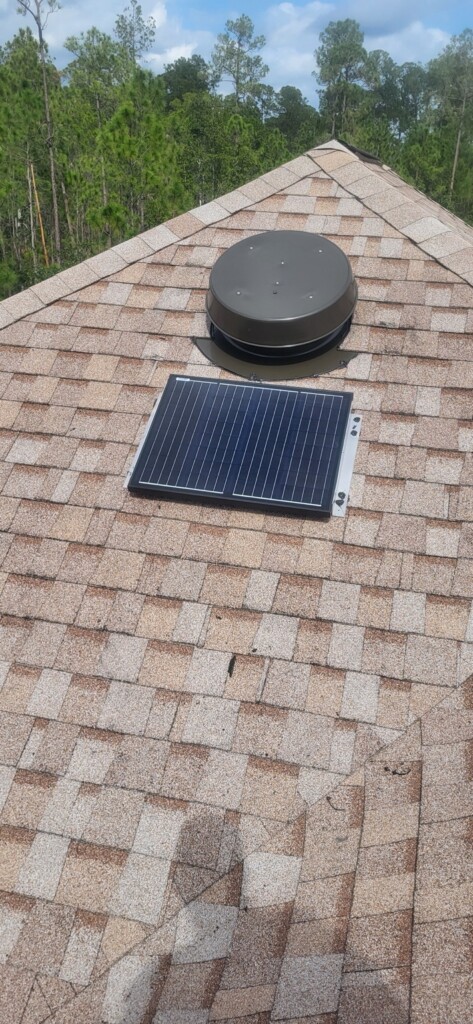
Asphalt-shingle roofs are Sundial’s most common solar attic-fan application. Proper placement, a compatible roof opening, flashing, weather protection, and attention to the surrounding shingles are important parts of a professional installation. The roof and attic configuration still need to be reviewed before equipment is selected.
Tile and Metal Roofs
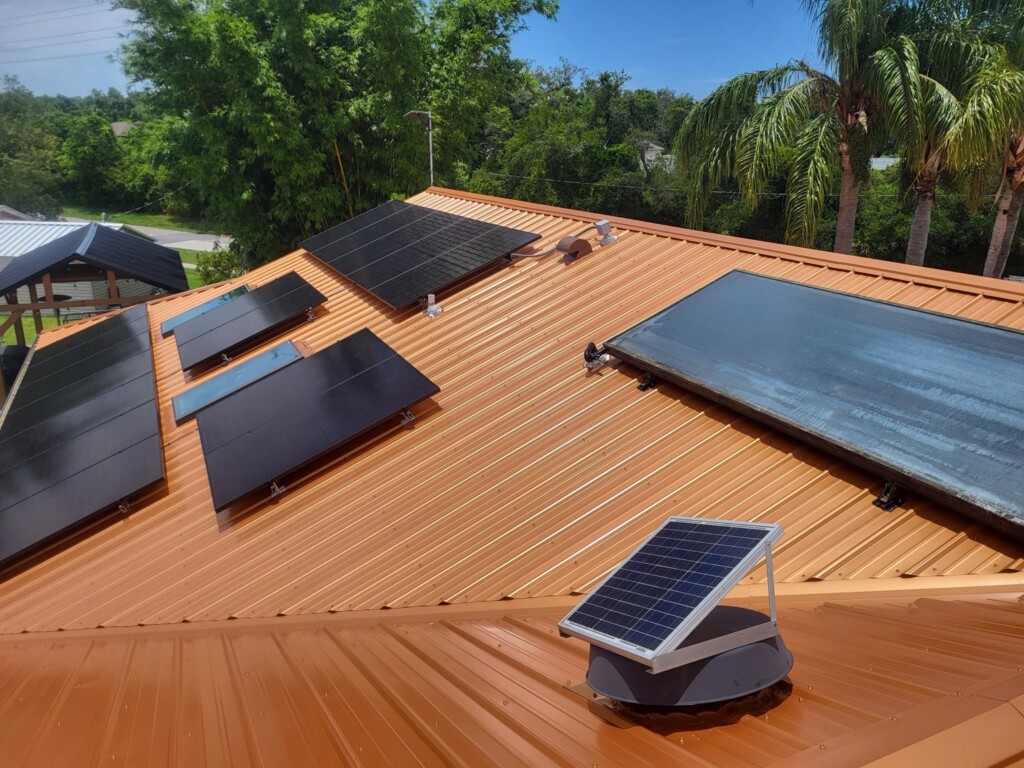
Sundial can handle appropriate tile- and metal-roof applications with roofing-contractor coordination when needed. Attachment, flashing, access, and weatherproofing methods vary by roof system. The approach used on an asphalt-shingle roof should not be assumed to be suitable for tile or metal roofing.
The photograph above shows a real Sundial solar attic-fan installation on a metal roof. Other solar equipment visible on the roof is separate from the attic-fan installation.
Solar Attic Ventilation for Florida Homes
Florida homes experience strong solar exposure, seasonal heat, and attic conditions that make proper roof and attic ventilation relevant. Warm air can accumulate beneath the roof, particularly during sunny weather. A correctly planned solar attic fan can contribute to the attic’s exhaust ventilation while operating primarily from solar energy.
Results vary with the home. Insulation, air sealing, roof color and material, shade, attic volume, intake ventilation, existing exhaust ventilation, outdoor conditions, and equipment sizing all influence the outcome. Sundial does not promise a specific attic-temperature reduction, a particular decrease in HVAC use, guaranteed savings, elimination of all moisture, or extended roof or HVAC life.
Service Area
Sundial Solar Services is based in Ormond Beach. All of Volusia and Flagler Counties are the primary service territory for solar attic-fan installation and replacement. Appropriate surrounding-area projects may be considered based on location, roof type, scope and coordination needs.
Solar Attic Fan FAQs
What does a solar attic fan do?
A solar attic fan uses electricity generated by its photovoltaic panel to exhaust attic air through a roof-mounted ventilation unit. Effective operation also depends on appropriate intake ventilation and the home’s overall attic and roof configuration.
Do solar attic fans run at night?
A standard direct-solar attic fan generally operates when sufficient sunlight is available. Operation varies with the product, available solar energy, installed controls, and attic conditions. Sundial does not present nighttime operation as a standard feature.
Can you replace an existing failed solar attic fan?
Yes. Sundial evaluates and replaces failed or aging solar attic fans. The review may include the fan, solar panel, controls, safety devices, roof penetration, flashing, wiring where applicable, and the condition of the existing equipment.
Do you install solar attic fans on shingle roofs?
Yes. Asphalt-shingle roofs are Sundial’s most common solar attic-fan application. The installation still requires appropriate placement, flashing, weather protection, and coordination with the existing roof and ventilation system.
Can you install solar attic fans on tile or metal roofs?
Sundial can handle appropriate tile- and metal-roof applications, with roofing-contractor coordination when required. Installation and flashing methods vary by roofing system and must be selected for the particular roof.
What is a thermal snap switch?
A thermal snap switch allows the fan to remain off during cooler attic conditions and resume normal operation as temperatures rise according to the installed device’s design. Manufacturers and models may use different operating thresholds.
Why is a fire-safety shutoff used?
A fire-safety shutoff is designed to stop fan operation during elevated-temperature conditions associated with a structure fire. Its purpose is to prevent the powered fan from continuing to move air under those conditions; it does not prevent fires.
Will a solar attic fan lower my electric bill?
Improved attic ventilation can be beneficial, but savings depend on the home, insulation, air sealing, HVAC equipment, roof, climate, fan design, and many other variables. Sundial does not guarantee a particular energy-bill reduction.
How many solar attic fans does my home need?
There is no universal number. Appropriate sizing and quantity depend on attic area and configuration, roof design, intake ventilation, existing exhaust, fan capacity, placement, and installation conditions. More fans are not automatically better.
Do you install AC-powered attic fans?
Sundial primarily installs solar-powered attic fans. Solar plus AC- or electric-assisted models may be evaluated for special applications or customer requests, but they are uncommon and are not Sundial’s primary attic-fan offering.
Request a Solar Attic Fan Quote
Whether you need a new solar attic fan or want an existing failed unit evaluated for replacement, Sundial can review the roof, ventilation conditions, equipment, and practical installation options.