
Solar + storage integration
Home Battery Backup & Energy Storage
Integrated energy storage for new and existing solar systems.
Based in Ormond Beach, Sundial Solar Services designs, installs, integrates, upgrades and services compatible home battery systems throughout Volusia and Flagler Counties. We work with homeowners planning battery storage for a new solar installation, evaluating an existing solar system, considering a compatible upgrade, or exploring an appropriately designed standalone or integrated energy-storage application.
Solar generation, battery storage and outage backup are related, but they are not the same thing. Solar panels produce electricity when sunlight is available. A compatible battery can store energy for later use. Providing power during a utility outage requires the proper battery, inverter, controls, electrical configuration and system design. The available capacity and the circuits that can operate depend on the equipment, property and customer’s goals.
How Home Battery Backup Works
A grid-connected solar system normally sends solar electricity to the home or utility grid according to its design. A compatible battery system can capture available energy and make stored electricity available later. Depending on the equipment and configuration, storage may support selected loads during a qualifying utility outage, help manage when stored energy is used, or provide other energy-management functions.
Solar panels alone do not automatically keep a home operating when the utility grid goes down. Grid-interactive systems generally shut down during an outage unless appropriate backup equipment and controls are installed. This protects utility workers and the electrical system. A properly designed backup configuration separates the supported portion of the property from the grid and manages solar, battery and household loads safely.
Sundial evaluates the complete system rather than treating the battery as a stand-alone appliance. Inverter architecture, electrical service, existing solar equipment, monitoring, available installation space, backup priorities and manufacturer compatibility all affect the appropriate approach.
Partial-Home vs. Whole-Home Backup
Battery backup is not one-size-fits-all. One homeowner may want a practical set of essential circuits supported during an outage, while another may want whole-home backup capability. Defining those priorities before equipment is selected helps create a system that matches realistic operating goals.
Selected or Essential Loads
A selected-load design can prioritize appropriately configured refrigeration, lighting, communications or internet equipment, selected receptacles and other chosen circuits. The final list depends on the electrical loads, available battery output and capacity, equipment configuration and the way the home is wired.
Whole-Home Backup
Whole-home backup may be possible with the right design, but the phrase “whole-home” should not be treated as a promise that every appliance can run simultaneously. Battery power output, storage capacity, the number of batteries, motor starting and surge loads, HVAC equipment, water heating, electrical-service configuration and customer priorities all matter. One battery is not automatically sufficient to power an entire home.
Battery Sizing & Outage Runtime
Appropriate storage capacity depends on what the homeowner wants to operate, how much power those loads require, desired backup duration, available solar production, battery chemistry and equipment, the number of batteries, weather and sunlight during the outage, and whether large loads are expected to run.
Runtime therefore cannot be reduced to a universal number of hours. Two homes with the same battery can experience very different results because their loads and operating choices differ. Sundial discusses priorities and evaluates the relevant electrical information before recommending a configuration. No battery design can guarantee uninterrupted power through every storm or utility outage.
Certified Battery & Energy Storage Experience
Tesla • Enphase • SolarEdge
Sundial has confirmed current certification relationships with Tesla, Enphase, SolarEdge and LG. Tesla, Enphase and SolarEdge are the primary customer-facing technology emphasis. Certification helps support informed equipment selection, installation and service, but it does not guarantee product availability, compatibility with every property, or manufacturer warranty approval in every circumstance.
Battery equipment and manufacturer programs change over time. Sundial evaluates the current product, system architecture and project requirements instead of assuming that every generation or model has identical capabilities.
Battery Systems Sundial Installs
Sundial installs or has access to compatible energy-storage solutions including Tesla Powerwall, Enphase IQ Battery, SolarEdge battery systems, LG battery systems, FranklinWH and other appropriate products. Tesla, Enphase and SolarEdge are confirmed certification relationships. FranklinWH and other available systems are not presented as certified relationships unless separately verified.
Product availability and compatibility vary. The objective is to select equipment that fits the solar architecture, electrical design, backup goals and manufacturer requirements—not to maintain a static product catalog that may become outdated.
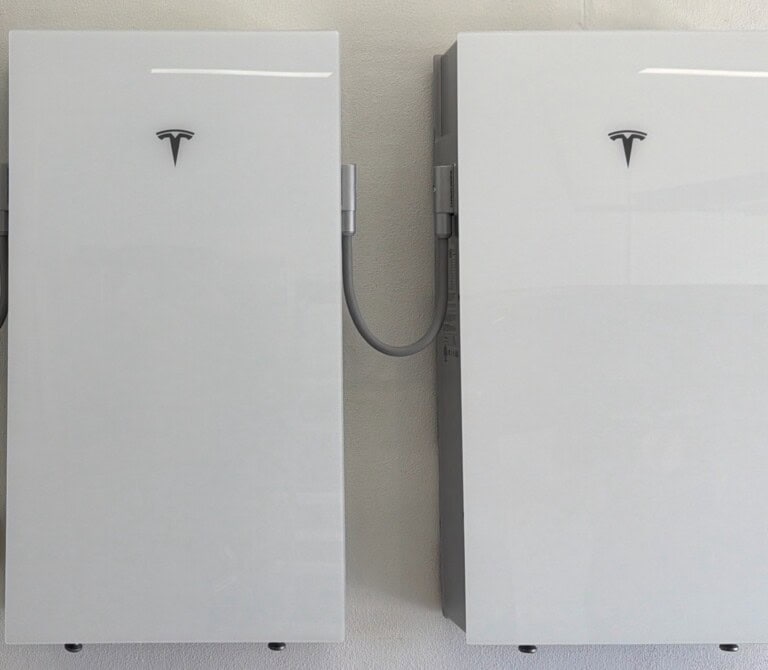
Tesla Powerwall
Tesla Powerwall is one available home energy-storage option. In a compatible design it may support solar integration, stored-energy management, backup power and monitoring or control through the applicable Tesla platform. Capabilities vary by Powerwall generation, associated equipment, electrical configuration and system design.
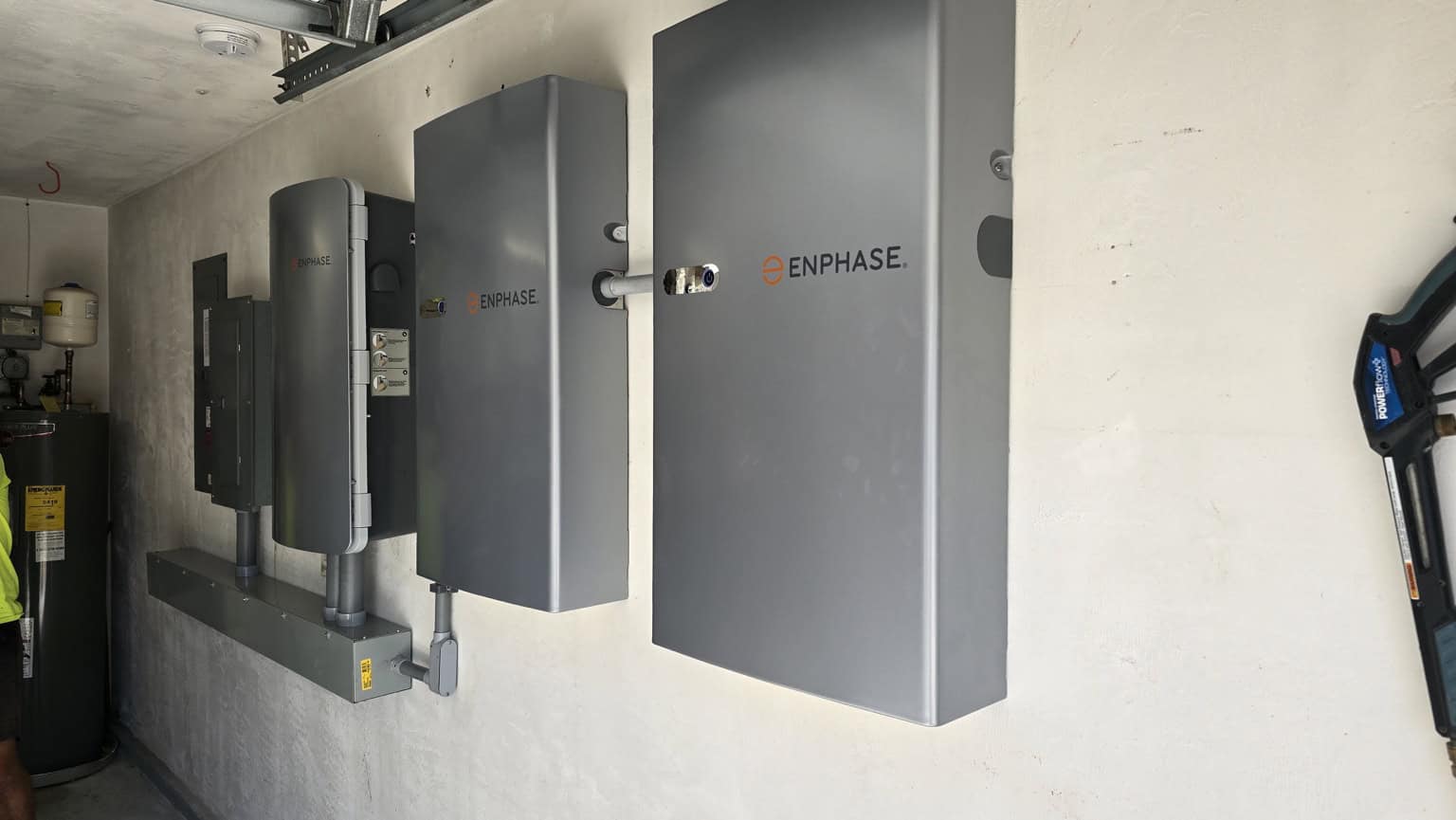
Enphase IQ Battery
Enphase battery equipment can be a natural consideration for compatible Enphase solar and microinverter ecosystems. Depending on the equipment, the design may offer integrated monitoring and modular storage or backup possibilities. Existing Enphase equipment still needs to be evaluated for generation, compatibility and the intended backup configuration.
SolarEdge Battery Systems
SolarEdge and LG storage equipment may be appropriate for compatible solar and electrical configurations. Older SolarEdge or LG systems should not be assumed to support every current battery product. The actual inverter, battery interface, equipment generation, monitoring and electrical architecture must be reviewed.
FranklinWH & Other Available Systems
Sundial can also install or source additional compatible storage solutions such as FranklinWH and other products where appropriate. These options may serve different integrated, backup or energy-management needs. Their availability does not imply a certified relationship or universal suitability.
Adding a Battery to an Existing Solar System
Homeowners with existing solar may be able to add battery storage without purchasing an entirely new solar array. Compatibility depends on the existing inverter or microinverter architecture, electrical design, age and condition of equipment, monitoring platform, available service or panel capacity, manufacturer support and the desired backup configuration.
Sundial can evaluate systems installed by other companies. The review may identify a straightforward compatible path, equipment that requires modification, or an older configuration for which the available storage options are limited. We explain the practical findings before recommending the next step.
Learn more about Sundial’s Solar Electric installation and service and Solar Repair & Maintenance.
Original Solar or Battery Installer Unavailable?
Sundial works with homeowners whose original installer went out of business, stopped servicing the area, no longer supports the equipment or is otherwise unavailable. You do not necessarily need the original contractor to have an existing system evaluated.
Before taking on service or adding storage, Sundial must evaluate the installed equipment for condition, compatibility, access to parts or manufacturer support, and serviceability. We cannot promise to take over every unsupported system, but we can provide a practical assessment and discuss appropriate options.
Battery Troubleshooting & Associated Solar Service
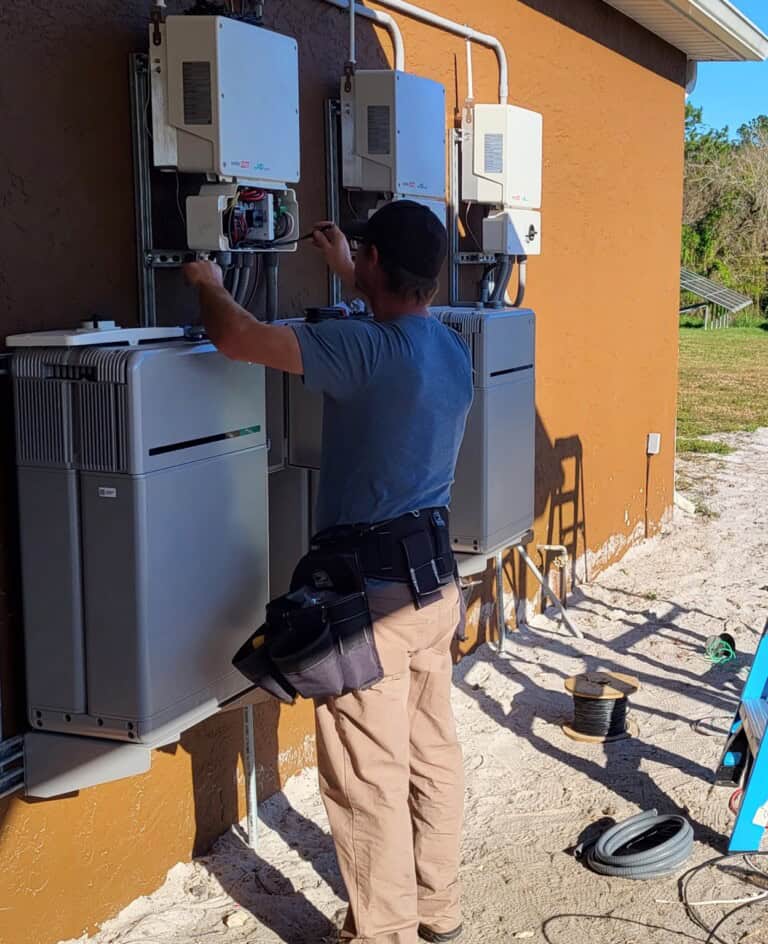
Sundial can diagnose and service qualifying battery equipment and associated solar components where appropriate. Service may involve communication or monitoring problems, inverter or storage faults, unexpected shutdowns, integration issues, configuration concerns, and manufacturer-directed warranty diagnostics.
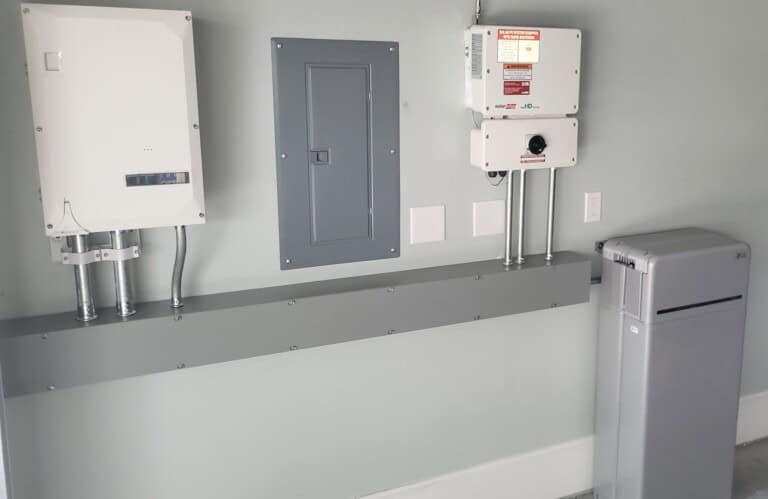
An alert or loss of monitoring does not always identify the underlying cause. Troubleshooting may require reviewing the battery, inverter, communications, controls, electrical connections, solar production and manufacturer information as a complete system. Homeowners should not open or attempt to repair battery equipment themselves.
For broader system concerns, visit Solar Repair & Maintenance.
Battery Safety
Home battery equipment contains high-energy electrical components and should be installed and serviced by appropriately qualified personnel. Do not open, dismantle, disconnect or attempt an internal repair.
If battery equipment shows smoke, fire, unusual heat, swelling, leaking, strong unusual odors or visible damage, maintain a safe distance and follow the manufacturer’s and emergency authorities’ guidance appropriate to the situation. Contact emergency services when conditions warrant. After the immediate situation is safe, qualified service personnel can help evaluate the equipment and related system.
Warranty-Related Battery Service
Sundial can assist with qualifying manufacturer warranty-related diagnostics, claim or replacement coordination, and service where applicable. Eligibility depends on the manufacturer, product, age, warranty terms, system configuration and individual circumstances.
Manufacturer approval and coverage are never guaranteed. Labor, replacement equipment or other charges may apply depending on the warranty terms and work required. Sundial will explain the known service scope and available options before additional work when practical.
Planning New Solar & Battery Storage Together
Considering solar and battery architecture together during a new project can help coordinate module production, inverter selection, storage equipment, electrical layout, monitoring and backup priorities from the beginning. It also creates an opportunity to discuss selected loads, available installation space and future energy needs before the system is installed.
A combined design still needs to be property-specific. Sundial does not use a universal package or promise a fixed amount of production, savings or outage runtime. Visit Solar Electric Installation & Service for more information about new solar systems.
Commercial Battery Storage
Sundial evaluates battery-storage options for businesses and commercial properties as well as homes. Commercial energy storage requires project-specific analysis of electrical loads, operating schedules, critical equipment, available solar generation, service configuration, outage priorities and the property’s broader energy goals.
Depending on the project, storage may be considered for critical-load support, solar-energy management, operational resilience or another defined objective. Equipment capacity, controls and operating strategy must be designed around the actual facility. Sundial does not use a universal runtime or savings promise for commercial storage.
Off-Grid & Special Energy-Storage Applications
Sundial has access to a broad range of off-grid and integrated or all-in-one energy-storage equipment. These applications require careful planning around electrical loads, solar generation, storage capacity, redundancy, weather conditions and the intended operating environment.
Off-grid equipment should not be selected solely because it is marketed as an all-in-one product. Sundial evaluates whether the equipment and design are appropriate for the particular application. This remains a specialized offering alongside our primary residential battery-backup work.
Cash and Financing Options
Sundial offers cash-purchase and financing options for qualifying battery and solar-plus-storage projects. Terms, eligibility and project economics vary; customers should review the specific proposal and financing documents.
For related help, explore solar repair and maintenance, service for a system whose original solar company is no longer available, or SunPower system service and upgrade options.
Battery Backup Across Central Florida & Florida’s East Coast
Utility outages can occur during tropical storms, hurricanes, severe weather and ordinary grid events. A thoughtfully designed battery system can provide useful backup capability for configured loads, but it should not be marketed as a guarantee of uninterrupted power through every event.
Based in Ormond Beach and primarily serving the greater Daytona Beach area, Sundial serves homeowners across a broader Central Florida and East Coast region extending from St. Augustine south to Titusville and west to Orlando. We use that regional experience to discuss realistic backup priorities and compatible equipment for Florida homes.
Home Battery Backup FAQs
Can I add battery backup to my existing solar system?
Possibly. The answer depends on the inverter or microinverter architecture, electrical configuration, equipment age and condition, monitoring, manufacturer compatibility and the backup goals. Sundial can evaluate systems installed by other companies.
Will my solar panels work during a power outage?
Solar panels alone do not automatically power a home during an outage. Grid-connected solar generally requires compatible backup equipment and controls to operate safely when the utility grid is down.
Can a battery power my entire house?
Whole-home backup may be possible, but it depends on battery output and capacity, the number of batteries, surge loads, HVAC and other large loads, electrical configuration and system design. One battery should not be assumed to operate every household load.
How many batteries do I need?
The appropriate number depends on the loads you want to support, desired backup duration, battery equipment, available solar production, electrical design and customer priorities. Sundial evaluates these factors rather than using a universal quantity.
How long will a home battery last during an outage?
Runtime varies with available stored energy, current household loads, solar production, weather, equipment configuration and operating choices. A universal runtime cannot be guaranteed.
Do you install Tesla Powerwall?
Yes. Tesla Powerwall is among the battery systems Sundial installs where compatible and appropriate. Product availability and project suitability must be confirmed.
Do you install Enphase batteries?
Yes. Sundial installs compatible Enphase IQ Battery systems and can evaluate Enphase solar or microinverter ecosystems for appropriate storage and backup configurations.
Do you work on batteries installed by another company?
Sundial can evaluate and service qualifying systems installed by other companies. Serviceability depends on equipment condition, access, compatibility, parts and manufacturer support.
What if my original installer went out of business?
Sundial regularly helps homeowners whose original installer is closed or unavailable. We first evaluate the existing equipment and then explain the service, upgrade or replacement options that appear practical.
Can battery backup be installed without new solar?
Some appropriately designed standalone or integrated storage applications may be possible. The answer depends on the equipment, electrical configuration, utility requirements and intended use.
Do you service battery systems?
Sundial diagnoses and services qualifying battery and related solar equipment where appropriate. We do not recommend homeowner access to internal battery components.
Can you help with manufacturer warranty issues?
Sundial can assist with qualifying diagnostics and manufacturer warranty coordination where applicable. Coverage and approval depend on the product, age, terms, configuration and individual circumstances; labor or other charges may apply.
Considering Battery Backup for Your Home or Solar System?
Tell Sundial what equipment you have, whether you are planning new solar or working with an existing system, and which loads or backup goals matter most. We will evaluate the available information and discuss a compatible project-specific approach.